
Before we dive into the technicalities of Amazon SEO, let us know some basic facts about the spectacular shopping platform.
Amazon.com is an e-commerce company, trusted and accepted internationally. It’s domain of services offered are:
- Online retail
- Computing
- Consumer electronics
- Digital content
- Daily deals and groceries.
The size of Amazon as an online store is unfathomable. Let’s review some statistics about this immense marketplace.
- Amazon is the leading e-retailer in the U.S. with close to 232 billion U.S. dollars in 2018 net sales.
- The majority of the company’s revenues are generated through e-retail sales of electronics and other products
- most valuable brands worldwide.
- An analysis by Slice Intelligence released in February found that 43% of all U.S. online retail sales were done through Amazon in 2016.
- Amazon is more valuable than all major brick-and-mortar retailers combined.
- Forty-nine percent of consumers turn to Amazon first when shopping for products online,
- One-fifth of Amazon sellers generate over $1 million annually.
Amazon accounts for a significant portion of online sales globally, highlighting its dominance in the e-commerce sector.
Amazon is like a personal shopper for you. Apart from the enormous range of products that it offers, Amazon is all adept at customizing the buyer’s experience. Once you visit Amazon’s homepage, it turns into your guide to your shopping experience. The Amazon search box is the primary tool customers use to initiate their shopping journey by entering keywords or product names. It offers you suggestions and recommendations based on your previous navigations and search results. Amazon also analyzes customer searches to provide personalized recommendations and improve product discoverability.
Over the past few years, Amazon’s growth has benefitted so many people, both buyers, and sellers. Opportunities are going to get even better with the times!
However, as more competition has penetrated the marketplace, it means sellers must put forth their best cards for a win-win situation.
When a buyer visits Amazon, he has only one intent: to purchase a particular product. But the question is: who will he buy the product from? Now, if you want to be the customer’s destination, you have to comprehend how Amazon functions and how to crack Amazon’s A9 algorithm.
Introduction to Amazon SEO
Amazon SEO, or search engine optimization, is the process of enhancing your product listings to improve their visibility and ranking within Amazon’s search engine. For sellers, mastering Amazon SEO is essential, as it determines how easily customers can find your products among millions of others. By strategically optimizing product listings with relevant keywords, high-quality product images, and informative product descriptions, sellers can boost their chances of appearing at the top of search results. This increased visibility leads to more sales and greater revenue. Optimizing product listings isn’t just about adding keywords—it’s about creating a compelling, customer-focused experience that aligns with what shoppers are searching for. High quality product images and clear, detailed product descriptions help build trust and encourage conversions, making Amazon SEO a vital part of any successful selling strategy.
Amazon’s A9 algorithm
There is one significant difference between other search engines and Amazon. On other search engines, the queries are more informational and navigational, seeking a particular product or service. Whereas Amazon queries come from people to purchase. So Amazon offers an immense marketplace for sellers. Unlike Google SEO, which focuses on content quality, backlinks, and technical site performance to improve website authority and organic rankings, Amazon’s search engine prioritizes sales performance and purchase intent, connecting buyers with products most likely to convert. Amazon’s A9 algorithm does it all, and its ranking criterion is based on three main factors;
- Factors affecting the conversion rate
- Factors that influence the relevancy of products
- Factors influencing customer satisfaction and retention of customers.
Amazon’s algorithm, also known as A9, is designed to connect ready-to-buy customers with relevant products, making sales velocity and conversion rate central to product rankings. Here comes the role of Amazon search engine optimization (Amazon SEO). Webmasters should optimize their product pages so that they are relevant to the queries of customers. Amazon SEO helps follow a proper marketing strategy directing efforts to improve the performance metrics and align listings with Amazon’s algorithm for better visibility and sales.
A. Factors influencing the conversion rate
Following factors play an important role in Amazon Ranking:
A strong sales history and a high number of positive reviews can significantly increase sales and improve your Amazon rankings, while negative reviews can harm conversion rates and reduce product visibility.
1. Amazon’s Best Sellers rank
One of the most important factors is the sales rank on Amazon, which is suggestive of higher volume of sales, and a great page ranking. Sales history is a key metric Amazon uses to determine product ranking, as consistent sales over time signal product popularity and relevance.
2. Customer feedback and reviews
The quality and quantity of reviews and feedback received for your product—especially accumulating positive reviews to enhance credibility and ranking, while negative reviews can decrease trust and visibility—play an important role in improving the conversion rate and hence your page ranking.

3. Answers to Frequently Asked Questions
Product pages that include answers to frequently asked questions help boost the conversion rate and hence the page rank.
Great content and clean architecture are required for excellent user experience. Nevertheless, the FAQ section helps employees answer simple queries from customers and hence draw more traffic and sales.
4. The quality of size and images
High-quality images of products having a proper resolution are essential. People like to zoom the product for a better view before making the final purchase.
5. Time on Page
Amazon keeps track of the amount of time a customer spends on a product page. This is indicative of how engaging your content is.
B. Factors influencing the relevancy of products
1. Title
A good product title is instrumental in improving product ranking. Within 200 characters, the title should be rich in keywords and not complicated. Including the primary keyword and other primary keywords in the product title is crucial for ranking, but keyword usage should be natural and strategic. Any product that you are selling, the title should carry the following information:
- Brand name
- Colour and/or flavor and/or variant
- Size and/or quantity
- Keywords
It is important to avoid keyword stuffing or keyword stuff in titles, as excessive keyword usage can harm readability and negatively impact search performance. Focus on clarity and ensure that keywords are integrated naturally.
Amazon declared in mid-June that all product titles would have to comply with the listing rules, otherwise customers will be unable to locate them on the platform. Amazon has now moved to favor listings that relevantly match the search terms of customers, instead of the titles that are stuffed with keywords.
Your product listings should be complete and optimized for positive user experience on Amazon.
2. Bulleted list for product features
All customers are immensely interested in the product features, so it is imperative to organize them in bulleted points. The prime focus should be on listing the keywords in between these features for a better rate of conversion. Including key features and keyword variations, as well as relevant backend keywords such as synonyms and variant names, can further enhance product visibility and search ranking.
3. A good description and specification of your product
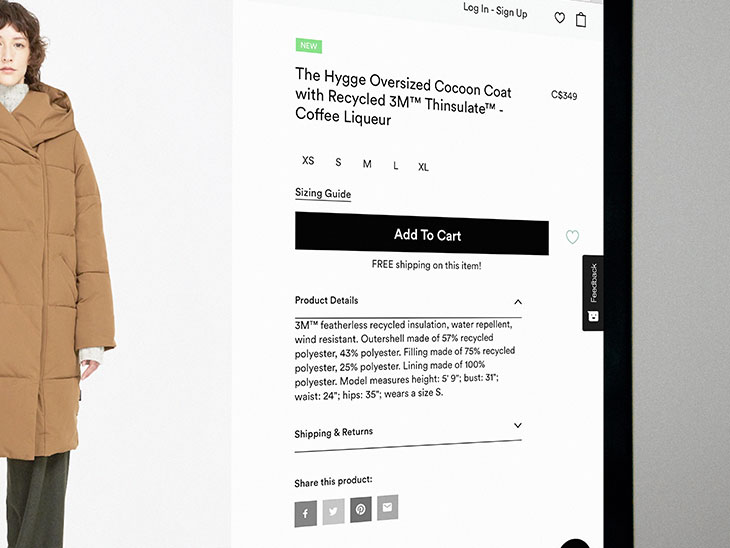
Remember, customers will make a purchase only if they find your product descriptions engaging and if your product includes all the necessary features that customers are looking for. A well-crafted product description is essential for a successful Amazon listing, as optimizing Amazon listings with relevant keywords can significantly improve your product’s visibility. So, spend time describing all the product features carefully.
While it is important to include keywords in your product description to enhance your Amazon listing, avoid keyword stuff and keyword stuffing. Overusing keywords can harm readability and user experience, which may negatively impact your Amazon rankings.
Products that do not bear a good description are likely to lose on sales to their competitor’s products. All the technical and physical specifications such as size, weight, color, shipping, and mode of payment should be included in the specifications section.
4. Categorize your products relevantly
While listing your products and assigning them under specific categories, efforts should be directed to assigning them under relevant categories. Selecting the most relevant product categories is crucial for improving visibility and search rankings on Amazon, as it ensures your products appear in the right filters and search results. Imagine yourself visiting an online store to purchase something but not being able to locate the desired product even after spending a lot of time looking for it. How frustrating the whole experience will be when you are looking for air conditioners and the search results showing up refrigerators in turn! Would you ever visit the site again?
Proper categorization is very important when you are selling products online because it irritates customers, and they are unlikely to return to your site again.
5. Plan your search terms or keywords with the help of Google Keyword Planner
Amazon offers you with the provision of a five field character limit to specify the search terms that you want to associate your products with. This you can do with the aid of a Google Keyword Planner. Analyzing search volume and search frequency rank helps you identify high-potential search terms and long tail keywords for your product. Using keyword research keywords ensures your listings align with what customers are searching for.
C. Factors influencing the customer’s satisfaction and retention
1. Product Feedback
Good product feedback will instill the faith of customers in your products, which is essential to prompt them to shell money for the product. Addressing negative reviews constructively and encouraging positive reviews can enhance your reputation and improve rankings. Negative seller feedback and reviews will lead you nowhere, and your sales and ranking will eventually dip. A one or two-star ratings of the products is considered negative feedback on Amazon.
2. Efficient Order Processing
Amazon’s ranking algorithm is very particular about the speed and accuracy of shipping products.Selling on Amazon requires the deliverance of exceptionally good customer service at all times. Amazon has the reputation of keeping up with its promises, so sellers selling on Amazon need to be constantly on their toes right from efficiently processing all the orders to keeping up with all the assurances and guarantees that you mentioned in the product listings.
3. Inventory management
Amazon’s inventory management has done a great job by keeping up with the expectations of its customers. Customers know that anything that they are going to order on Amazon is going to land up to their door in not more than a few working days.Amazon is particular about keeping a stock of popular products, so sellers that do not stock their products well in advance are doomed by Amazon’s algorithm.Amazon manages inventory at two levels. First is FBA or Fulfillment By Amazon, where Amazon directs its merchants where the product is to be sent.
The second is fulfillment by the merchants themselves, where they manage their own chain of supply.
4. Perfect order percentage Metric
Every Amazon seller has a performance metric in his Amazon account. Customer satisfaction is at the core of Amazon’s business model. Amazon keeps track of the number of perfectly managed, accepted, and fulfilled orders and assigns you a good or bad ranking accordingly. A perfect order has the following features:
- No negative feedback
- No claim of refunds from customers
- Fulfillment of all guarantee claims
- No late shipments.
5. Order Defect Rate(ODR)
Amazon tracks orders that have defects and expresses the total count as a percentage over a time span of 60 days Amazon allows an ODR under 1% in order to be a seller on Amazon. An ODR above 1% may result in the deactivation of your account.
Amazon selling is based on customer-centric philosophy, so in order to sell on Amazon, the quality of products is the key for all sellers to achieve a high page rank on Amazon.
There are three main types of ODR
- Negative Feedback rate- Amazon has the reputation of having millions and trillions of satisfied customers all over the globe. Amazon selling is all about satisfied customers, so multiple negative feedbacks may result in blocking or suspending the seller’s account.
- A-Z Guarantee Claim Rate- The Amazon A-to-Z Guarantee safeguards customers when they make purchases on Amazon. Amazon’s guarantee covers both the timely delivery and the state of items being sold. If customers are unsatisfied with both and cannot reach a resolution with the seller, Amazon enables them to file a claim.
- Credit card chargeback Rate- A credit card chargeback rate is the number of times customers disputed purchases that were charged to their credit cards expressed as a percentage.
Amazon constantly monitors the performance of all sellers and notifies them when they are off-target. This review process gives you time to work on your performance.
In most cases, sellers are required to improve their performance measurably within a time span of 60 days, and sellers performing dreadfully are suspended.
6. Exit Rate
This metric is a measure of the number of times visitors just visited your page to exit without making any purchase. There can be a number of reasons for visitors exiting without making a purchase
- He does not find the prices competitive
- He is not satisfied with the Order Processing System
- He finds the categorization of products irritating
- The loading speed of the site is very slow
- The products are out of stock
- The shipment and delivery of goods take too long.
- The products are not described and listed properly
- The customer cannot zoom the products for a better view.
- There is no proper feedback and review of the products.
Finally, having got a fair idea of the ranking criterion on which the Amazon A9 algorithm functions, Amazon SEO means optimizing the product listings in accordance with this criterion.
Amazon SEO will help you improve the visibility of your product by featuring complete and relevant information sought by customers.
More visibility implies better sales, and better sales imply a higher ranking.
You need to keep your product prices competitive at all times if you do not wish to succumb to your competitors.
Amazon SEO is all about keeping the ODR, Exit rate low, and boosting the perfect order percentage metric.
Amazon SEO helps a business to manage inventory levels, process all the orders efficiently and effectively.
Thus in league with the customer-centric philosophy of Amazon, Amazon SEO is all about maintaining the millions and trillions of satisfied and happy customers worldwide!
Amazon SEO is not as simple as it may sound, and it is not possible for businesses to manage SEO all by themselves. It is wise to outsource the responsibility of optimizing the shopping platform and concentrate on the other vital aspects of your business.
Simple Intelligent Systems will be happy to help you with Amazon SEO for your products if you are a seller on Amazon. So optimize your selling experience on Amazon with us. Contact us for your unique support requirements on Amazon!
+91 (991) 800-2394
U.S. contact: +1 (724) 340-4462
Email: info@sisindia.info
Skype: jitin.mishra
Amazon Brand Registry and Its Benefits
Amazon Brand Registry is a powerful program designed to help brand owners protect their intellectual property and enhance their presence on Amazon. By enrolling in Amazon Brand Registry, sellers gain access to advanced tools that make keyword research and product listing optimization more effective. One standout feature is the ability to add A+ Content to product listings, allowing brands to showcase their products with rich text, high-quality images, and even videos. This not only improves the customer experience but also increases conversion rates and sales. Additionally, Brand Registry members can access detailed search query performance reports, which provide valuable insights into customer search behavior. These analytics help sellers refine their keyword strategies and better understand which search terms drive the most engagement and sales, ultimately leading to more effective product listings and increased sales.
Competitive Pricing Strategies
Competitive pricing is a cornerstone of a successful Amazon SEO strategy. The right price can significantly impact your sales velocity and overall ranking in Amazon’s search results. To stay ahead, sellers must regularly analyze the market, considering factors like production costs, shipping fees, and competitor pricing. Tools such as Amazon’s pricing dashboard and third-party pricing software make it easier to monitor and adjust prices in real time. Implementing strategies like price matching, limited-time discounts, or bundling can help you maintain a competitive edge and attract more buyers. By keeping your prices competitive, you not only increase your chances of winning the Buy Box but also drive more sales, which in turn boosts your product’s visibility and ranking on Amazon.
Search Engines and Amazon SEO
Amazon’s search engine operates differently from traditional search engines like Google. While Google focuses on delivering information, Amazon’s search engine is designed to connect customers with products they are ready to buy. This means that relevance, sales velocity, and customer satisfaction are key factors in determining which product listings appear at the top of search results. To optimize for Amazon’s search engine, sellers should focus on using relevant keywords throughout their product listings, including in product titles, bullet points, and descriptions. High quality product images and engaging product descriptions also play a crucial role in attracting customers and increasing conversions. Leveraging tools like Amazon’s search query performance reports and third-party SEO software can provide deeper insights into which keywords and strategies are driving more sales, helping sellers continually refine their approach for maximum impact.
Sales and Revenue Optimization
The ultimate goal of Amazon SEO is to maximize sales and revenue by ensuring your product listings are as effective as possible. This involves a combination of thorough keyword research, competitive pricing, and the use of high quality product images and compelling product descriptions. By consistently optimizing product listings and monitoring performance through Amazon’s analytics tools and third-party software, sellers can identify opportunities for improvement and make data-driven decisions. Focusing on sales and revenue optimization not only increases your return on investment but also helps you build a sustainable, long-term business on Amazon. By staying proactive and adapting to changing search trends and customer preferences, sellers can boost their visibility, drive more sales, and achieve higher rankings in Amazon’s search results.